Live the Magic of a Day in the Ecuadorian Amazon
Join me as I narrate the incredible experience of spending a day in the Ecuadorian Amazon.
We began this adventure from the city of Baños de Agua Santa, heading towards Puyo - Pastaza.
Baños is known as the Gateway to the East. We descended from 1,820 meters above sea level to 950 meters, transitioning from a temperate, fresh climate to a humid, warm one perfect for what lies ahead.
We made a quick stop at the "Mira Mera" viewpoint, where we could see the Pastaza River and part of the jungle, offering a preview of what awaited us.
Two hours after departing, we arrived at what is known as the secondary jungle, where we headed for lunch included in the tour. Here, we had several options:
- Traditional Maito (Ayapamco): A dish originating from the Kichwa Amazonians that consists of tilapia or fish wrapped in a leaf and cooked with herbs and spices.
- Chicken.
- Beef.
- Vegetarian options.
To drink, we enjoyed iced tea made from typical Amazonian leaves like Wuayusa, a plant known for its energizing and medicinal properties.
After lunch, we visited the "Hola Vida" reserve. Equipped with rubber boots, we embarked on a hike to the waterfall of the same name. The journey lasted about an hour, during which we learned about various species of trees, leaves, plants, fruits, and animals:
- The Chonta Tree: Also called "the tree that moves," this palm can grow up to 20 meters tall. In Amazonian tradition, it’s culturally symbolic as its wood is used to make spears, arrows, and utensils. It’s said to "move" because it develops stilt-like roots that allow it to slowly "shift" toward areas with more light or fertile soil.
- Toquilla Leaf: Famous for giving life to the toquilla straw hat, globally known as the Panama hat. It thrives in the warm and humid climates of coastal and Amazonian regions. It’s super durable and often braided into makeshift crowns.
- Tagua: Known as vegetable ivory, this hard and white seed from the Chonta palm is used to make buttons, jewelry, sculptures, and fine crafts.
- Lemon Ants: These tiny inhabitants of the Ecuadorian Amazon have a citrus aroma and flavor when crushed and eaten. Yes, they’re edible and taste quite similar to fresh lemon. They help control pests, aerate soil, and are used in traditional remedies for pain relief.
- Clay: A natural treasure for skincare, highly valued for its purifying and revitalizing properties. Rich in minerals like iron and calcium, it’s perfect for facial masks as it helps absorb excess oil, eliminate impurities and toxins, leaving skin clean and fresh.
- Dragon’s Blood: Extracted from the tree of the same name, it’s used to heal wounds, fight infections, and protect the skin. It contains antioxidant compounds that help prevent diseases like cancer by protecting cells from oxidative damage and promoting their regeneration.
After completing the trail, we arrived at the magnificent "Hola Vida" waterfall. Towering at approximately 40 meters and surrounded by lush vegetation, this cascading water creates a beautiful natural pool where swimming is possible. It’s historically significant as shamans performed rituals here for cleansing and purification. We enjoyed a 20-minute swim before preparing to return.
Next, we headed to a Kichwa community called "Wayuri," which means "To Bloom" in Spanish. The song of the forest and the chirping of birds welcomed us for an experience that transcends conventional tourism.
Upon entering, women offered us a pilche filled with chicha de yuca a traditional ancestral drink fermented alongside sweet potato that refreshes and nourishes while evoking the living legacy of their ancestors.
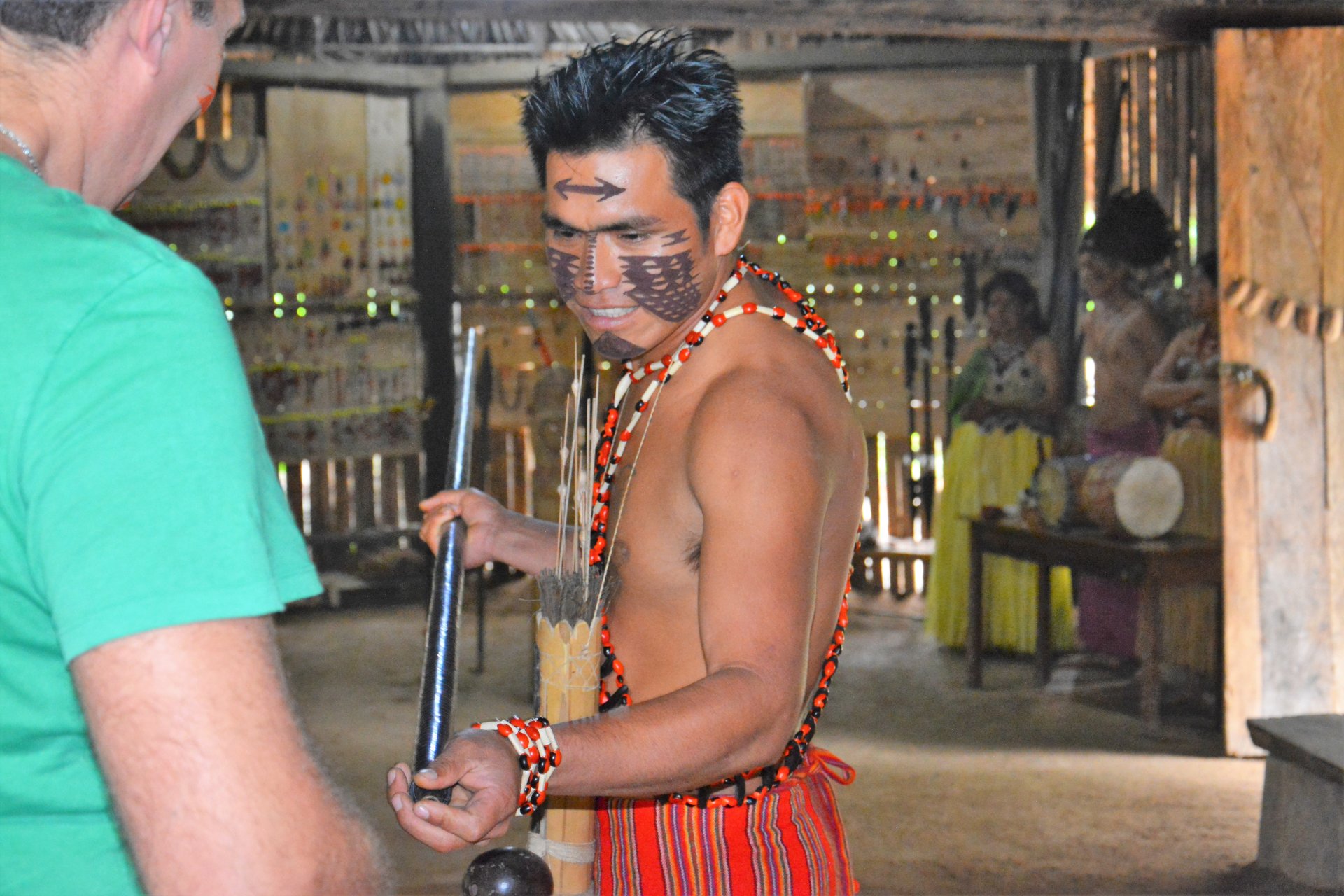
Children participate and learn from an early age: painting faces, dancing, crafting items, or simply sharing their culture with visitors. They thoughtfully approach us to adorn our faces with patterns that hold deep cultural significance using a small stick paired with red achiote seeds.
This act carries profound cultural and symbolic meaning:
- Spiritual Protection: The red color is associated with vital strength; before ceremonies, dances, or rituals, Kichwa communities apply achiote as a protective shield for its wearer.
- Identity and Belonging: It serves as a cultural marker; each community may have its own designs indicating origin, social role, or life stage.
- Straight and diagonal lines: Strength and bravery.
- Curves and spirals: Cycles of nature and life.
- Dots and geometric figures: Clan or family symbols.
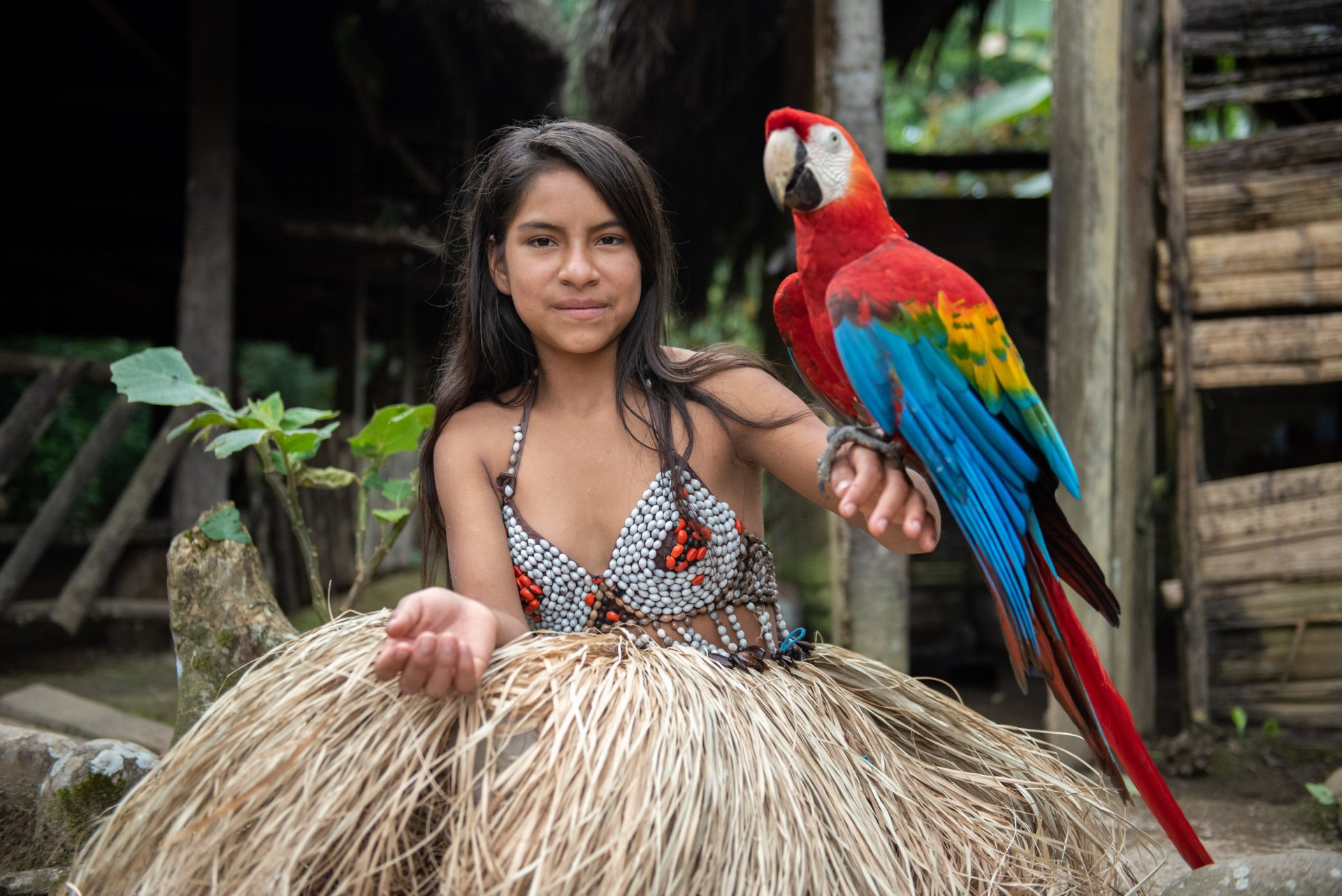
Ancestral music and dance come alive as a group of women and girls dressed in outfits made from toquilla leaves and seeds perform traditional dances to the rhythm of drums crafted from peccary hide, inviting us to join their presentation.
We then visited an artisan shop where items crafted by the community’s families are sold. Each purchase supports them by funding their children’s education or acquiring essential food supplies they cannot otherwise sustain. In these shops, you can find:
- Ethnic Jewelry: Necklaces and bracelets made from seeds and fibers naturally dyed. Some seeds like huayruro are considered amulets against negative energy.
- Musical Instruments: Maracas, drums, flutes, chakapas used in rituals and performances.
- Utensils and Tools: Harvest baskets, wooden trays, coconut spoons, blowguns, and spears.
- Textiles and ceremonial clothing: Skirts made from plant fibers, feather crowns, shirts, and dresses dyed with natural pigments like achiote or huito.
- Sculptures and carvings: Representations of sacred animals like jaguars, anacondas, or toucans; figures symbolizing protective spirits.
"Each necklace, each basket, each Amazonian carving holds the whispers of the jungle and the wisdom of its inhabitants."
Next was a canoe ride lasting approximately 20 minutes. These canoes are made from various woods:
- Cedar: Resistant yet lightweight.
- Balsa: Very light and easy to work with but less durable.
- Guayacán: Extremely strong and durable.
- Chonta: Used in parts for reinforcements or paddles.
The canoe-making process involves hollowing out trunks with axes and machetes before polishing them with fire and manual tools. This ensures they are water-resistant and sturdy enough for navigating fast-flowing rivers or flooded jungle areas.
Once we finished the canoe ride, we headed to "La Chocolatera," a local family dedicated to cocoa cultivation and chocolate production. They welcomed us with an explanation about cacao fruit.
Its oval-shaped pods with rough skin range from golden yellow to intense red tones. Inside are seeds covered by juicy white pulp.
The chocolate-making process follows these steps:
1. Harvesting: Collecting ripe cacao pods from trees.
2. Fermentation: Seeds with pulp are placed in wooden boxes or baskets to ferment for 5–7 days.
3. Drying: Seeds are sun-dried for several days to reduce moisture to 7–8%.
4. Roasting: Seeds are roasted to enhance flavor and aroma while making it easier to remove their shells.
5. Grinding: Seeds are ground into a paste called cocoa liquor containing cocoa butter and cocoa solids.
6. Mixing: Depending on the type of chocolate desired, sugar and milk are added for tasting.
A curious fact is that roasted cacao seed shells can be used to make tea often discarded but highly valued for their antioxidant properties along with vitamins and minerals. In the Amazon region, some communities consume it as a comforting drink during moments of calm or as a natural alternative to other teas or infusions.
Heading towards our final destination, we savored stunning views of the Pastaza River just in time for sunset at Indichuris Viewpoint a magical corner where the Ecuadorian Amazon reveals its grandeur. From its elevated platform, visitors can admire a sea of green trees dotted with winding rivers reflecting golden sunlight.
Indichuris which translates to "Children of the Sun" is not just a viewpoint; it’s a bridge between humanity and nature a place to admire, breathe deeply, connect with the richness and mystery of the Amazon rainforest. It captivates not only with panoramic views but also hidden caves and its famous swing over the jungle.

We concluded our day returning from this marvelous experience in Ecuador’s lungs back to where our adventure began, the city of Baños de Agua Santa.

Discover the breathtaking Ecuadorian Amazon, a natural paradise brimming with biodiversity, ancient cultures, and stunning landscapes. Explore its unique treasures and embark on an unforgettable journey into the heart of the rainforest. Your adventure starts here!
by Explorsierra Tourism Agency Ecuador